Stiffness, limited rotation, and the deep ache between neck and shoulder that comes back every week.
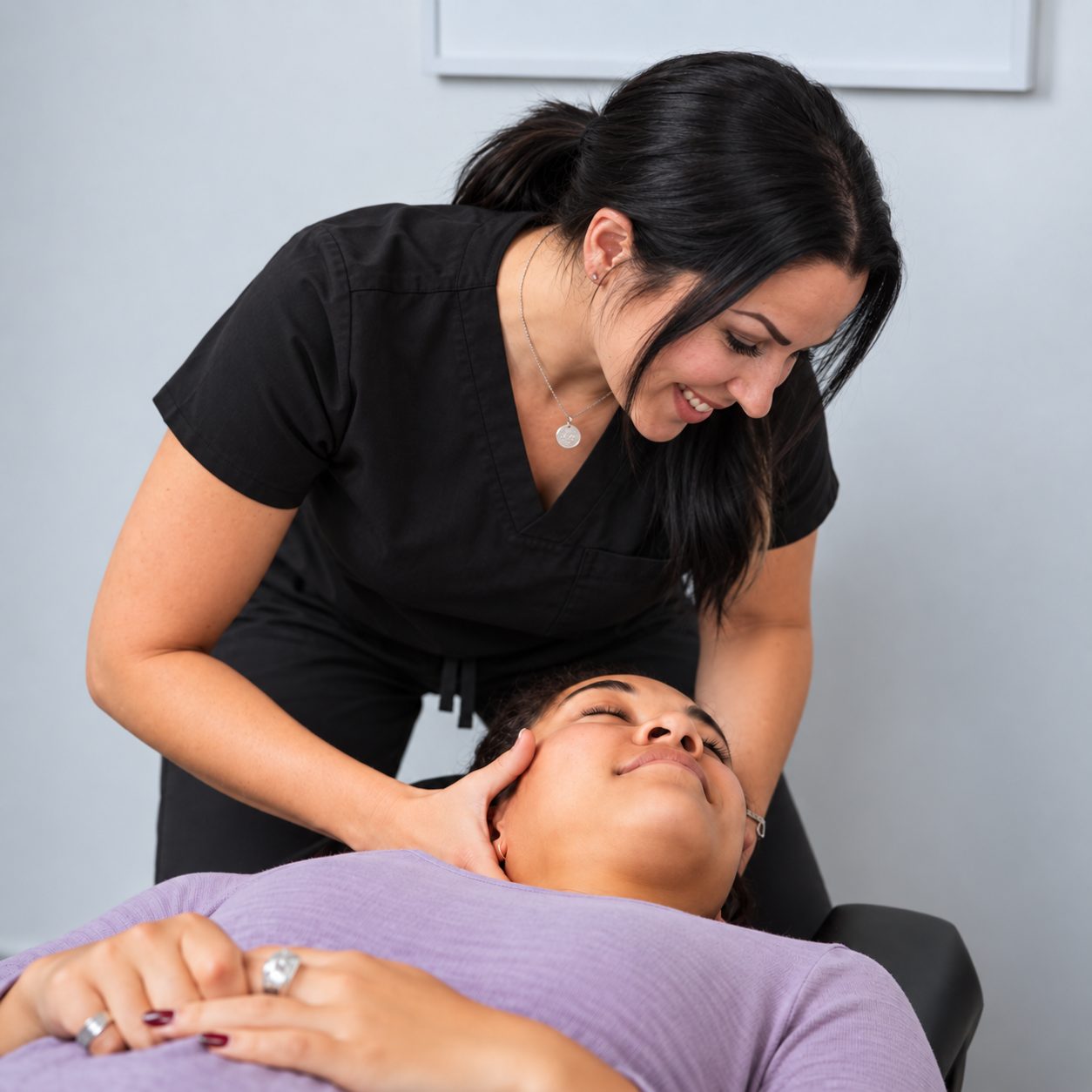

By the time neck pain is bad enough to book an appointment, it is usually not only the neck. The upper back has stiffened, the shoulder blade has stopped gliding properly, and the small muscles at the base of the skull have been holding tension for months. Treating the sore segment on its own tends to buy a few good days and then the problem returns.
So the examination covers the whole region — cervical spine, upper thoracic spine, ribs, shoulder girdle and the way you hold your head when you are not thinking about it. The goal is to find which parts have stopped contributing, because those are usually what left the painful segment doing all the work.
Get your head turning fully and comfortably again — checking a blind spot should not be an event.
Settle the upper trapezius and suboccipital muscles that have been braced for months.
Bring the upper back and shoulder blade back into the movement, so the neck is not compensating alone.
Where headaches are coming from the neck, treating the neck is often what changes them.
Different origins, different plans. The examination at your first visit is what tells them apart.
Heavy backpacks, screen time and sport all show up in young necks. Care for children uses age-appropriate, low-force technique and looks quite different from adult treatment. See pediatric chiropractic →
We take a full history first, including any headaches, arm symptoms, dizziness, recent collisions and your general health. Then we measure how far your neck actually moves in each direction, test the joints segment by segment, and examine the upper back and shoulder girdle alongside it.
If there are symptoms into the arm, that gets a neurological screen as well — reflexes, strength and sensation — so we know whether a nerve root is involved before anything else happens.
If you do not want your neck manually adjusted, say so at the start. There are effective alternatives and you will not be talked into anything you are uneasy about.
Neck pain accompanied by dizziness, visual disturbance, difficulty swallowing or speaking, unsteadiness on your feet, or new weakness anywhere needs assessing before any treatment, not after. The same goes for neck pain following significant trauma, or alongside fever, unexplained weight loss or a history of cancer. Dr. Anna is a registered nurse as well as a chiropractor, and this screening is taken seriously rather than treated as paperwork.
Serious complications from cervical adjustment are very rare, and screening beforehand is how that risk is kept low — which is why the history and examination come first and why symptoms like dizziness or visual changes matter so much. That said, it is a reasonable thing to feel uncertain about. If you would rather not have manual neck manipulation, we have genuinely effective alternatives in instrument adjusting, mobilisation and soft-tissue work. Tell us and that is what you will get.
Sometimes, with manual adjusting. The noise is gas moving within the joint — it is not bones grinding, and it is not a measure of whether the treatment worked. Instrument and low-force techniques produce no sound at all and can be just as effective.
We can treat the joint restriction and muscular tension it causes, and that usually brings quick relief. Keeping it away depends on what happens for the other hundred and sixty-seven hours of your week — screen height, breaks, and a couple of specific exercises. Treatment without those changes tends to be a repeating subscription, which is not what we are aiming for.
Simple, recent neck pain often responds within a handful of visits. Long-standing patterns, or neck pain with headaches or arm symptoms, usually take longer. You will get an estimate at the first appointment and a reassessment against it — open-ended care with no review point is not how this clinic works.
Whiplash symptoms frequently appear a day or two after the collision rather than immediately, so feeling reasonably fine on the day does not mean much. Getting assessed early is worthwhile — both to screen for anything that needs medical attention and because gentle, graded movement started early tends to produce better outcomes than waiting for it to settle on its own.
A full assessment of the neck, upper back and shoulder girdle — and a technique you are comfortable with.
Book an Appointment