Instrument-assisted soft-tissue mobilization — targeted treatment for muscles, tendons, and fascia that aren't moving the way they should.
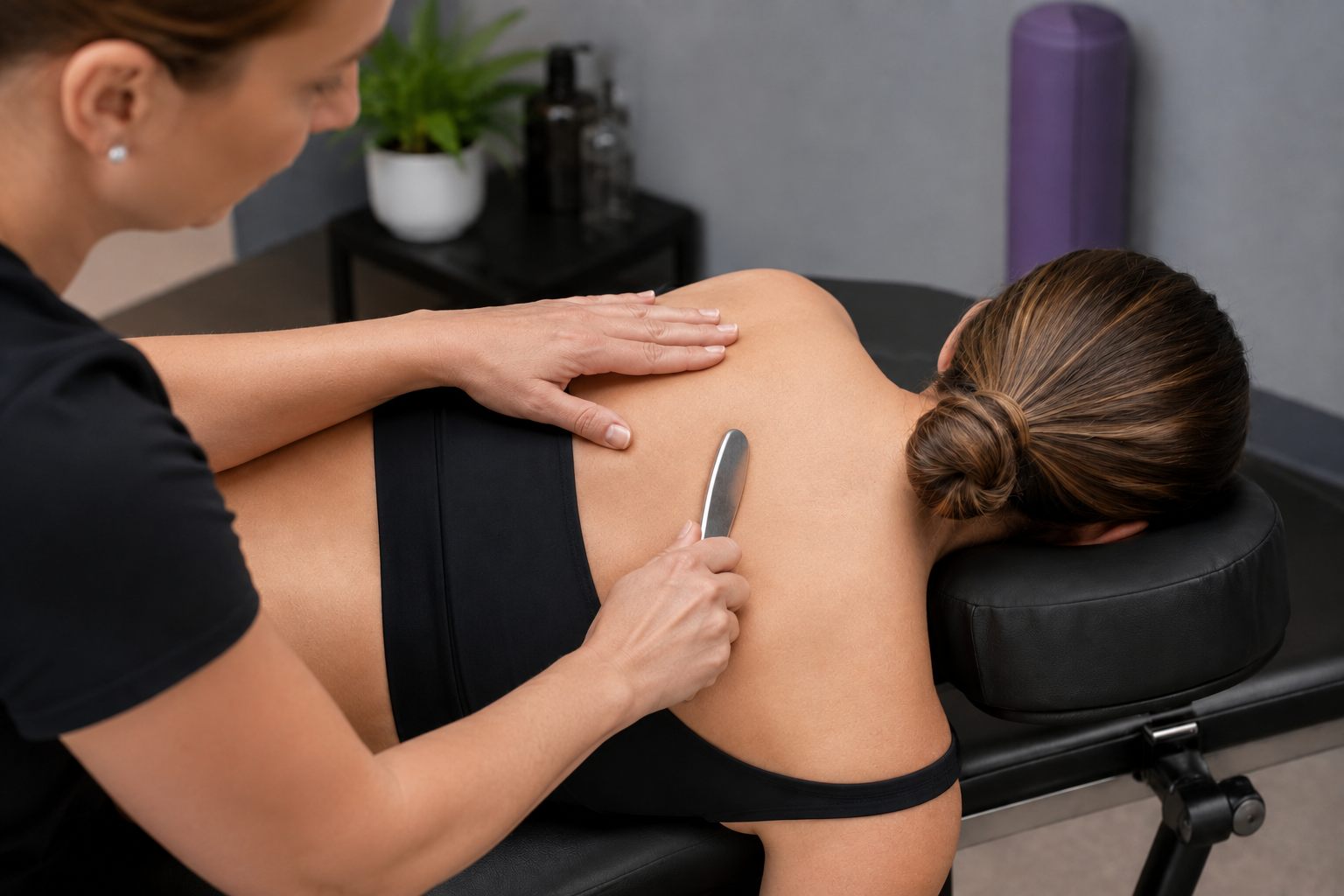
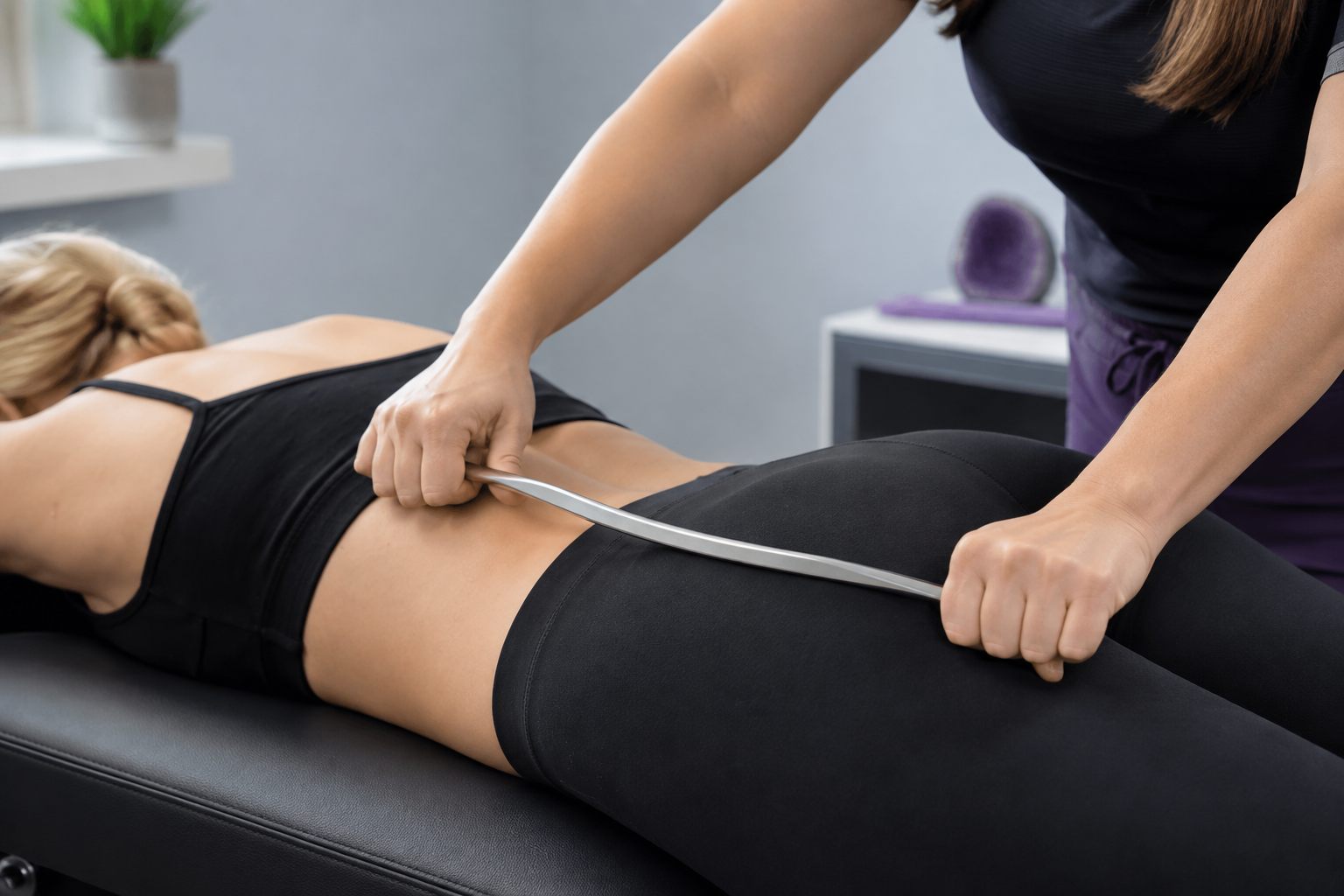
Muscles and connective tissues can become irritated, tight, or less mobile following injury, repetitive activity, postural strain, surgery, or athletic training. When these soft tissues aren't moving well, they contribute to pain, stiffness, restricted movement, and difficulty returning to normal activities.
At Simpson Family Wellness, we use Graston Technique® — a specialized form of instrument-assisted soft-tissue mobilization (IASTM). Smooth, contoured stainless-steel instruments allow us to feel subtle differences in tissue texture and apply controlled, targeted pressure to areas that may not be moving normally.
Break through stubborn muscle and fascial tightness that manual therapy alone can't reach.
Restore range of motion restricted by scar tissue, adhesions, or repetitive-use changes.
Support healing of irritated tendons by addressing tissue restrictions and improving local circulation.
Help prepare the body for mobility work, corrective exercise, and return to full activity.
Graston Technique may be incorporated into care wherever soft-tissue restrictions are contributing to pain or limited movement.
Tennis and golfer's elbow, repetitive gripping strain, computer and mouse-related discomfort, and sports or work-related tendon irritation all respond well to instrument-assisted treatment.
Before using the instruments, we evaluate your symptoms, movement, and treatment goals. A small amount of emollient may be applied to help the instrument glide comfortably over the skin.
Most patients describe the treatment as a firm gliding or rubbing sensation. Areas of greater tension may feel slightly "gritty" beneath the instrument — that's normal. Pressure is adjusted throughout and should remain tolerable.
Significant bruising is not the goal of treatment. Tell us immediately if treatment feels sharp, burning, excessively painful, or causes numbness or tingling.
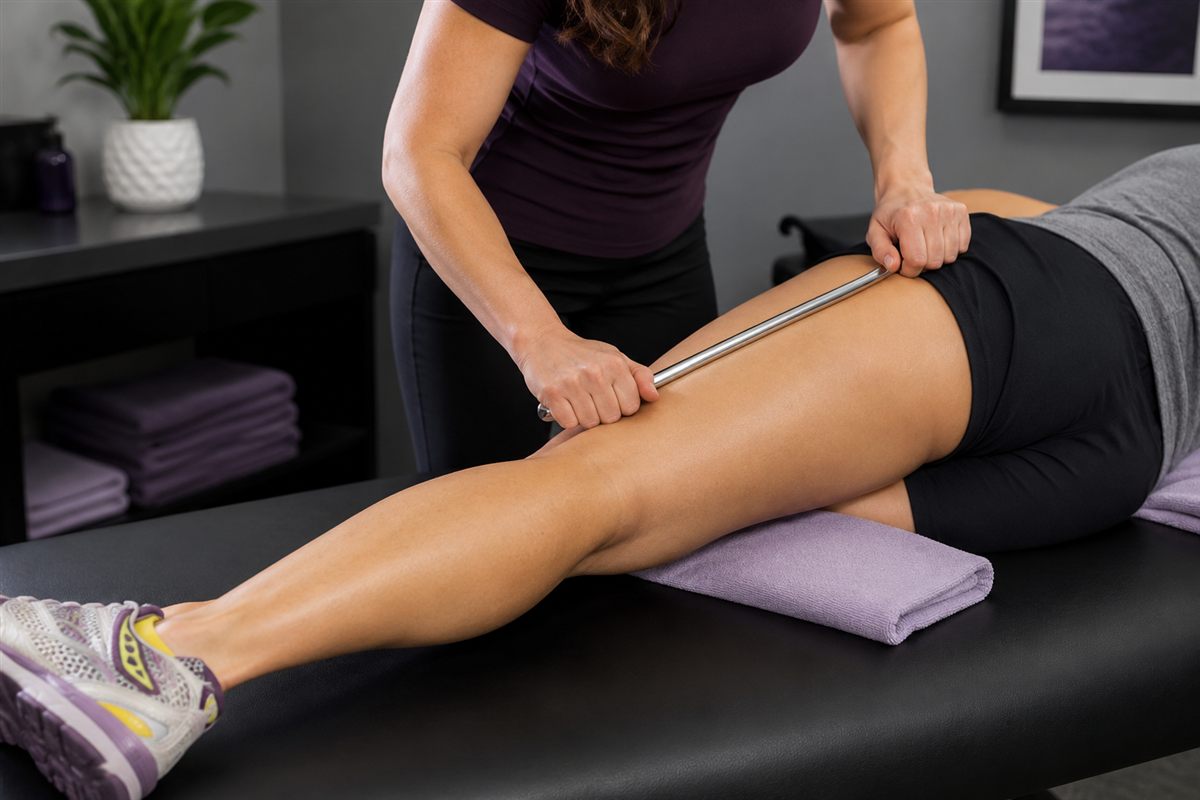
Graston Technique is rarely used as a standalone treatment. Depending on your condition, it may be combined with chiropractic adjustments, RockTape kinesiology taping, red light therapy, cupping therapy, corrective exercises, and postural guidance. We assess how your muscles, joints, and movement patterns contribute to the problem and develop a plan built around your individual needs.
It shouldn't be excessively painful. Most patients feel a firm gliding pressure — areas with more restriction may feel more sensitive. Pressure is continually adjusted to stay within your comfort level. The treatment does not need to cause significant pain to be effective.
Occasional light bruising can happen, especially in areas with significant soft-tissue restriction, but significant bruising is not the goal. Any bruising typically resolves within a few days. We adjust technique and pressure to minimize this.
Graston Technique uses stainless-steel instruments to detect and treat specific areas of tissue restriction that hands alone may not identify as precisely. The instruments allow for targeted, controlled pressure in a way that complements — rather than replaces — manual massage or soft-tissue work.
Graston may not be appropriate over open wounds, active skin infections, recent fractures, or certain acute injuries. Additional precautions apply for individuals with bleeding disorders or those on blood-thinning medication. We review your health history and examine the area before treatment to confirm it's right for you.
Absolutely — and it's most effective when it is. Graston Technique is frequently incorporated into chiropractic visits at Simpson Family Wellness, along with RockTape, red light therapy, and corrective exercises depending on your condition.
Whether you're managing a sports injury, repetitive strain, or stubborn muscle tightness — Graston Technique may be a valuable part of your care plan.
Book an Appointment